Wear Face Mask and Wash Your Hand Design Review
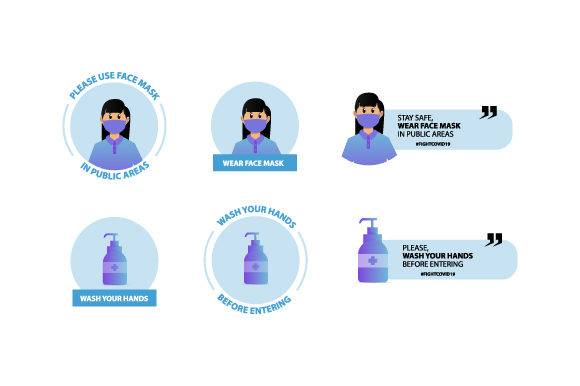
As an embroidery digitizer and product reviewer, I approach every new graphic asset with a specific question: will this actually stitch out well, or is it just a pretty picture? When evaluating the Wear Face Mask and Wash Your Hand Design, my first impression is that this is a highly functional piece of visual communication. Originally categorized under Infographics and Graphics, this design carries a clear public safety message that translates surprisingly well into textile applications. The layout is balanced, featuring distinct iconography for mask-wearing and hand hygiene, which suggests it was created with scalability in mind. For those of us in the craft business or running an Etsy seller shop, finding graphics that bridge the gap between digital infographics and physical merchandise is rare but valuable.
The provided file formats—AI, EPS, JPG, PNG, and SVG—are excellent source materials for creating a custom machine embroidery design. While these are vector and raster graphics rather than pre-digitized embroidery files, they offer the clean lines necessary for professional digitizing. As a designer, I appreciate having the AI and EPS vectors because they allow me to trace precise shapes without the jagged edges often found in low-resolution images. This clarity is essential when planning stitch types, whether you intend to use a smooth satin stitch for borders or a textured fill stitch for solid areas.
Real-World Application: The Community Tote Bag Project
To truly test the viability of the Wear Face Mask and Wash Your Hand Design, I mentally placed it on a recent client project: a series of canvas tote bags intended for a local community health outreach program. In this scenario, the design needs to be legible from a distance while maintaining a friendly, non-clinical aesthetic. Canvas is a forgiving fabric, but it has a distinct weave that can swallow fine details. Because this design relies on recognizable symbols, I determined it would work best as an applique design or a bold running stitch outline combined with fill areas.
For this tote bag design, the dual-icon layout allows for a centered placement above the pocket or a smaller repetition along the bottom hem. The visual weight feels appropriate for a reusable shopping bag or a library tote. Unlike complex photographic embroidery, this graphic style respects the limitations of thread. It communicates care and safety without looking like a medical chart. For small shop product creators, this versatility means the same digitized file could easily transition from a tote bag to a volunteer t-shirt or a washable face mask pouch, maximizing the return on your digitizing investment.
Navigating Fabric Textures and Hoop Constraints
While the design is versatile, practical experience dictates caution when moving away from stable woven fabrics. If you are planning sweatshirt embroidery or working with stretchy knits, the open spaces in infographic-style designs can become problematic. Knit fabrics shift during stitching, and if the stitch density isn't adjusted correctly, the gap between the mask icon and the hand washing icon might distort. Always use an appropriate stabilizer; for fleece or sweatshirt material, a cut-away stabilizer is non-negotiable to maintain the structural integrity of the message.
I would also advise against using this design on highly textured surfaces like terry cloth towels or thick caps without modification. The intricate details often present in hand-washing illustrations can get lost in the pile of a towel. Similarly, curved surfaces like baseball caps require a design that flows with the curve; a rigid, rectangular infographic layout may cup or pucker on a hat front. For baby embroidery items, such as bibs or onesies, you must simplify the design significantly. Tiny lettering accompanying the icons will not stitch out clearly at small sizes. In these cases, isolate just the icons and increase the line width to prevent needle breaks and ensure safety.
Visual Impact and Commercial Viability
The commercial value of the Wear Face Mask and Wash Your Hand Design lies in its immediate recognizability. For Etsy sellers and makers of personalized gifts, trust is built through clarity. A muddy, poorly stitched safety message undermines the professionalism of the finished product. When digitized correctly, this design projects competence and care. It works exceptionally well for commercial embroidery contracts involving schools, clinics, or senior centers where branding needs to be informative yet approachable.
From a presentation standpoint, this graphic serves as an excellent base for printable mockups. Before committing thread to fabric, I recommend testing the design in black and white digital mockups to check contrast. Does the mask stand out against a navy sweatshirt? Is the water droplet visible on a white apron? These visual checks save time and thread. Furthermore, because the source files include SVG and PNG, you can create matching digital assets for social media or website listings, ensuring brand consistency across both physical and digital touchpoints.
Essential Designer Notes for Successful Stitch-Outs
Before you load this design into your machine for a final embroidery project, adhere to these practical guidelines derived from professional review:
- Verify Licensing: Since this is a graphic asset pack (AI, EPS, JPG, PNG, SVG) and not a pre-digitized embroidery file, confirm that your license permits the sale of finished embroidered products or the resale of the digitized file itself.
- Test on Scrap Fabric: Never run a new digitization directly on a sellable item. Test the Wear Face Mask and Wash Your Hand Design on a scrap of the exact fabric and stabilizer combination you plan to use.
- Check Thread Color Contrast: Infographic designs rely on color coding. Ensure your thread colors provide sufficient contrast against the garment color so the safety message remains legible.
- Simplify for Small Sizes: If adapting this for a chest logo or sleeve cuff, remove any text smaller than 4mm in height. Rely on the universal symbols of the mask and hands to convey the message at reduced scales.
- Evaluate Stitch Direction: When digitizing from the vector source, pay attention to stitch direction. Aligning stitches with the shape of the mask or water flow enhances the visual appeal and reduces puckering.
- Confirm Hoop Size Compatibility: Measure the final digitized dimensions against your available hoops. Avoid resizing the design by more than 10-15% after digitizing, as this alters stitch density and can lead to thread breaks or coverage gaps.
Ultimately, the Wear Face Mask and Wash Your Hand Design is a robust foundation for meaningful embroidery work. It bridges the utility of public health messaging with the warmth of handmade goods. Whether you are creating holiday embroidery for healthcare workers, outfitting staff for a boutique, or selling safety-themed accessories at a craft fair, this design offers the flexibility needed for professional results. By treating the vector source as a blueprint rather than a final product, and by respecting the physics of thread and fabric, you can transform this digital graphic into a high-quality, tangible asset that resonates with customers and end-users alike.